

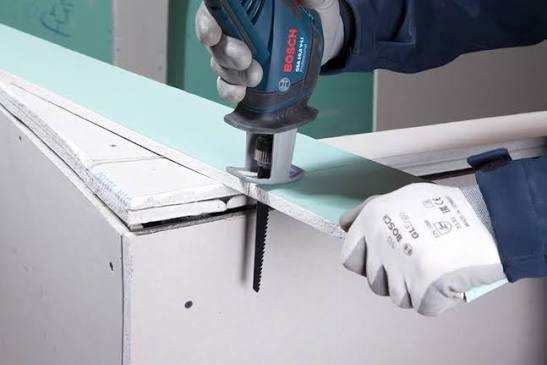
Walk onto any active demolition or renovation site and you’ll almost certainly find one tool being used more than almost any other. It cuts through walls, removes old plumbing, breaks down framing, and handles material after material without needing to be swapped out. Reciprocating saws have become the go-to cutting solution for professionals across construction, renovation, plumbing, and electrical trades—not because they’re the most precise tool available, but because they combine power, reach, and adaptability in a way that nothing else quite replicates.
Understanding the features that separate an excellent model from an average one takes only a modest amount of research, but the payoff in job site performance is significant.
What Makes a Reciprocating Saw Different from Other Power Saws
The defining characteristic of a reciprocating saw is its mechanism. The blade moves rapidly back and forth in a linear (or slightly elliptical, in orbital-action models) motion. This push-pull action generates aggressive cutting force that works particularly well in demolition scenarios where the user isn’t cutting along a clean edge or following a marked line.
Contrast this with a circular saw, which requires a flat surface and forward momentum to cut effectively, or a jigsaw, which excels in precision curve-cutting but lacks the raw power for demolition. The reciprocating saw fills the space between these tools—it’s purpose-built for aggressive, adaptive cutting.
Evaluating Motor Performance Under Load
Motor performance under load is the metric that matters most in real-world use. Many tools perform adequately in unloaded speed tests but bog down when resistance increases. In demolition work, resistance is constant—nails embedded in timber, knots in old wood, and layered building materials all create significant cutting resistance.
Quality motors maintain consistent speed under load, ensuring the blade doesn’t stall mid-cut. Stalling strains the motor and can cause the blade to bind dangerously. When evaluating a reciprocating saw, look for models with overload protection and thermal cutoffs that protect the motor during sustained heavy use.
The Shoe: An Underrated but Critical Component
The shoe—also called the foot or guard—is the metal plate at the base of the blade. Its primary function is to act as a pivot point during cutting, allowing the user to brace the saw against the work surface and use leverage to drive the blade through material more efficiently.
An adjustable shoe is a feature worth prioritizing. As blades wear, the cutting portion of the blade moves further from the shoe. An adjustable shoe lets you reposition it along the blade to keep the active cutting teeth within the optimal working zone, effectively extending blade life and maintaining cutting efficiency.
Grip Configurations for Different Cutting Scenarios
Reciprocating saws come in two primary grip configurations: top-handle (also called in-line or barrel-grip) and D-handle.
Top-handle models position the grip directly above the blade line. This configuration offers excellent control for vertical cuts and is generally preferred for overhead work where the tool needs to be pushed upward.
D-handle models position the grip behind and below the blade axis. This provides strong wrist leverage for horizontal cuts and is often preferred for general-purpose demolition where the tool is used at various angles.
Some models include a secondary front grip, which provides two-handed stability during demanding cuts. For heavy-duty applications, two-handed control significantly improves accuracy and reduces operator fatigue.
How Blade Reach Affects Demolition Capability
The length of the blade used directly influences what can be reached and cut. Long blades—particularly those in the range suited to timber and structural materials—can cut deeply into walls or floors, reaching material that shorter blades cannot access.
For pipe cutting in confined spaces, shorter, stiffer blades provide better control. Flexible blades, while suited to flush cutting along surfaces, can create unpredictable movement in hard materials if not used correctly.
Building a blade inventory that covers short rigid options, mid-length general-purpose blades, and long demolition blades prepares the user for the full range of tasks encountered on a renovation project.
The Case for Higher-End Models in Professional Settings
Budget reciprocating saws can handle light-duty tasks, but they reveal their limitations quickly in professional environments. Lower-quality motors overheat during sustained use. Blade clamping systems on cheaper models develop play over time, causing the blade to wobble and cutting accuracy to deteriorate. Plastic housings crack under job site conditions where tools are subject to drops and physical stress.
Investing in a higher-quality model from the outset yields a longer service life, reduced downtime for repairs, and consistent performance that cheaper alternatives simply cannot sustain. For professionals who use this tool daily, the cost difference between entry-level and professional-grade models is recovered quickly in reduced blade wear, fewer tool replacements, and time saved.
Maintenance Habits That Keep the Tool Running
Even the best reciprocating saw requires basic maintenance to perform at its best over an extended period.
Blade inspection: Dull blades force the motor to work harder. Replace blades before they’re completely worn rather than waiting for performance to drop noticeably.
Housing and vent cleaning: Demolition debris collects inside vents and can restrict airflow, causing overheating. Periodic cleaning with compressed air keeps internal components clear.
Shoe tightening: Check that the shoe’s adjustment mechanism remains secure. A loose shoe shifts during cuts, affecting accuracy and increasing operator fatigue.
Battery care (for cordless models): Store batteries at partial charge in temperature-stable environments to maximize cycle life.
Selecting the Right Saw for Long-Term Use
The best reciprocating saw for your needs is the one that aligns with the frequency, intensity, and variety of your work. Occasional renovation use calls for different specifications than daily professional demolition. Consider the tool’s compatibility with blade systems you already use, the availability of replacement parts, and the manufacturer’s service support.
A well-chosen reciprocating saw, properly maintained, delivers reliable performance across a working life that spans many projects and many years.